How Apple's key supplier is positioning itself at the center of the robotics revolution, and why it might be one of the best values in the space.
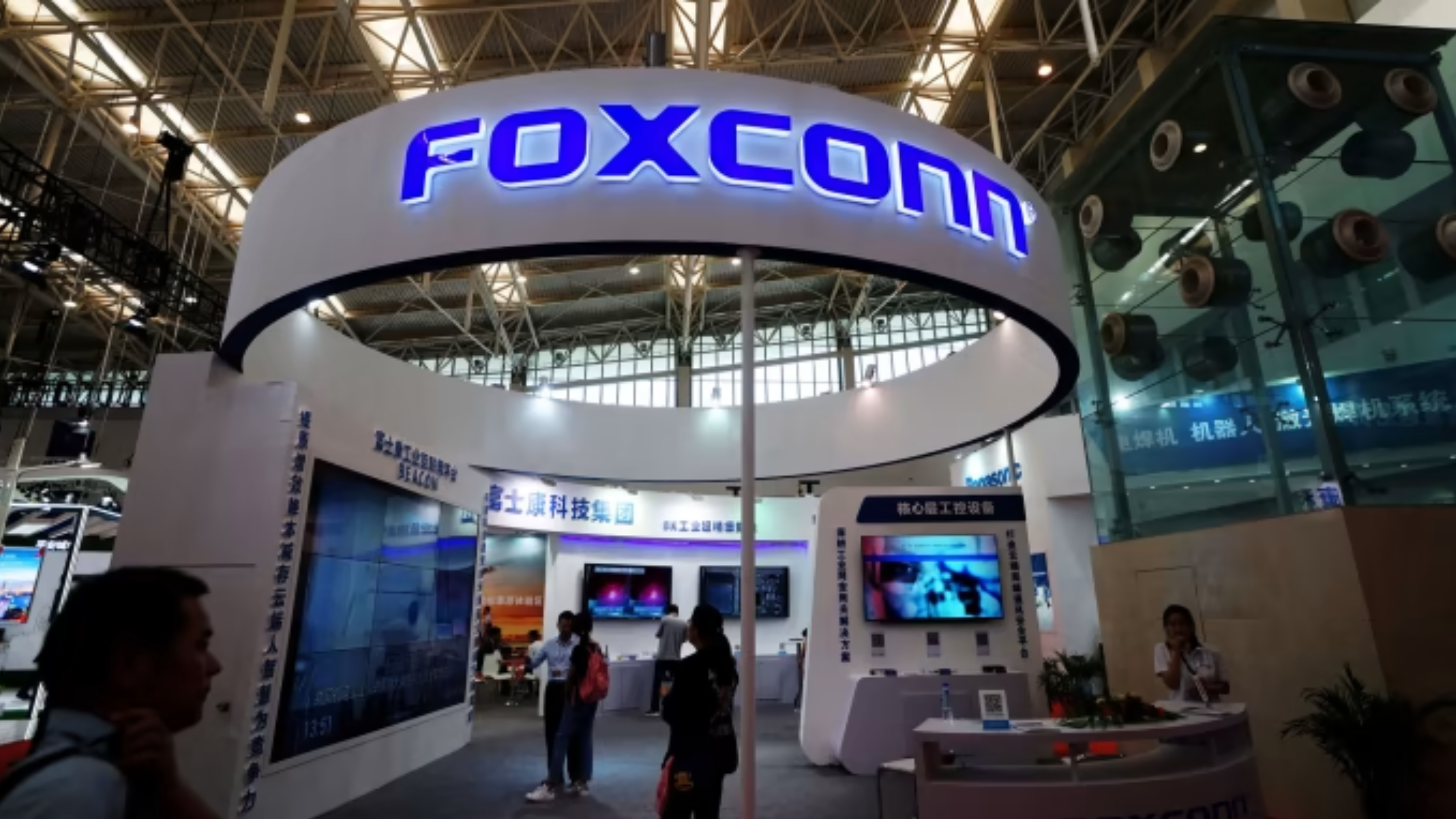 When most people think of Foxconn (Hon Hai), they picture massive factories assembling iPhones. But smart investors are starting to see something much bigger. Foxconn is increasingly positioned at the intersection of AI infrastructure, advanced manufacturing, and the emerging humanoid robotics market.
Beyond the iPhone: A Robotics Transformation
Foxconn has become one of the portfolio management team’s higher conviction holdings in the ROBO ETF. Recent developments explain why: we believe the company is evolving from a pure play Apple supplier into a critical player across the robotics and AI infrastructure value chain. And they’re posting numbers that back up this narrative.
In Q2 2025, AI servers and data center gear surpassed consumer electronics as Foxconn's largest revenue stream, accounting for about 41 percent of income. Management also guided to triple-digit year-over-year growth in AI server revenue into Q3. [1]
The Nvidia Partnership: More Than a Supplier Contract
Foxconn's collaboration with Nvidia goes well beyond conventional contract manufacturing. Nvidia and Foxconn announced plans to build and operate AI factories and to integrate Nvidia platforms across digitalized manufacturing, autonomous machines, and robotics. [2]
In the United States, Foxconn and Nvidia have been in discussions to deploy humanoid robots at Foxconn's new Houston facility, which will assemble Nvidia GB300 AI servers. Foxconn is developing its own humanoids and has tested third-party units, with initial tasks focused on manufacturing chores like object placement, cable insertion, and assembly. [3]
The Humanoid Market Opportunity
The inaugural World Humanoid Robot Games that were held in August in Beijing highlighted rapid progress in bipedal systems. Unitree and other teams showcased advances but also the
remaining limits, which is why near-term traction is most likely in controlled industrial settings. [4]
Manufacturing employs several hundred million people globally, so even small percentages of automation represent a very large addressable market. A conservative way to frame it is that manufacturing makes up roughly the mid-teens share of global employment, which translates to on the order of hundreds of millions of workers. [5]
Why factories fit first: Once you train a robot to perform a discrete manufacturing task, you can replicate that behavior across many units and lines. Standardized tasks, controlled layouts, and clear safety protocols make factories the most logical early deployment zone.
Valuation: A Hidden Gem
Foxconn still trades at what we see as attractive multiples compared with its expanding AI footprint. As of late August 2025, public data shows a price-to-sales approximately 0.38 to 0.40, and forward P/E generally in the low- to mid-teens, which is consistent with an EV to sales multiple near 0.35. (Please remember to always check live data, since these statistics will naturally move with markets and stock prices.) [6]
Multiple Growth Vectors
AI infrastructure boom: Foxconn is Nvidia's largest server manufacturer and is scaling capacity to meet demand. [7]
U.S. capacity build-out: The company is expanding AI hardware operations in the United States, including new activity in Texas and ongoing work in the Midwest. [8]
Robotics deployment: Pilots of humanoid robots in Foxconn's own AI server production lines are under discussion, which would accelerate learning loops. [9]
Automation experience: Foxconn has a long track record of factory automation and "Foxbot" deployment, which supports its dark factory ambitions over time. [10]
The Dark Factory Vision
The ROBO team has been talking about the potential for fully autonomous, lights-out factories for a while now. But we realize this is an ambitious vision, not a given. Foxconn's history with automation and its current AI partnerships give it a credible path to increase autonomy step by step. Early use cases will target repeatable tasks and supervised automation before broader rollouts. [11]
Investment Implications
Pure play humanoid companies are early in their adoption journey and as such they’re mostly pre-profit. Foxconn offers exposure to the robotics wave through a profitable manufacturer that is already benefiting from AI server demand. Note that Foxconn is also a current holding in the ROBO ETF, which provides diversified exposure to robotics and automation innovators. [12]
Key Catalysts to Watch
- Progress on humanoid pilots or deployments inside Foxconn's U.S. AI server facilities
- Continued mix shift toward AI servers, including rack-level shipments and U.S. capacity additions
- Announcements around Foxconn's annual Hon Hai Tech Day and related AI or robotics showcases [13]
The Bottom Line
The robotics revolution is not only about startups. Scale manufacturers that can build, integrate, and deploy at volume will be central winners. We are witnessing both addressable market expansion, as well as opportunity for gross and operating margin expansion through improving product mix. At current valuations, Foxconn offers a compelling way to invest at the intersection of AI, manufacturing, and robotics, with real revenue already tied to AI infrastructure and a credible path to robotics deployment.
Definitions:
Price-to-Sales (P/S Ratio) A company's market value divided by its annual revenue. Shows how much investors are willing to pay for each dollar of sales. Lower ratios may indicate better value, but this varies by industry.
Forward P/E (Forward Price-to-Earnings) A company's current stock price divided by its expected earnings per share over the next 12 months. Uses analyst forecasts rather than past earnings. Helps investors evaluate if a stock is expensive relative to its anticipated profitability.
EV to Sales (Enterprise Value-to-Sales) Enterprise value (market cap plus debt minus cash) divided by annual revenue. Similar to P/S ratio but includes debt in the calculation, giving a more complete picture of what you'd pay to own the entire business relative to its sales.
Current Holdings As Of 9/2/25:
Apple (0% of ROBO ETF holdings)
Foxconn (1.68% of ROBO ETF holdings)
Nividia (1.51% of ROBO ETF holdings)
Holdings subject to change. Current and future holdings are subject to risk.
Click here for the fund's current holdings.
Sources
[1] Data Center Dynamics, "Foxconn generated more revenue from AI servers than iPhones in Q2 2025," Aug 15, 2025.
[2] Nvidia investor press release, "NVIDIA Partners With Foxconn to Build Factories and Systems for the AI Industrial Revolution," Oct 17, 2023.
[3] Reuters, "Foxconn's Apple era fades as AI servers drive growth," Aug 18, 2025.
[4] South China Morning Post, "Unitree and X-Humanoid top medal total," Aug 18, 2025.
[5] Our World in Data, "Manufacturing jobs as a share of total employment," updated Aug 27, 2024.
[6] Yahoo Finance, "HNHPF Key Statistics," viewed Aug 2025.
[7] (Data Center Dynamics)
[8] Houston Chronicle, "Foxconn bets Houston can train America's AI workforce," Aug 22, 2025.
[9] Reuters, "Nvidia, Foxconn in talks to deploy humanoid robots at Houston AI server plant," Jun 20, 2025.
[10] The Verge, "Foxconn cuts 60,000 jobs and replaces them with robots," May 25, 2016.
[11] The Verge, "Foxconn cuts 60,000 jobs and replaces them with robots," May 25, 2016.
[12] (Schwab Wall Street; ETF Database) Charles Schwab holdings page, "ROBO ETF holdings" (showing Hon Hai weighting), Aug 2025.
[13] Foxconn press release, "Hon Hai Technology Group Second Quarter Update," Aug 14, 2025.

Carefully consider the Funds’ investment objectives, risk factors, charges and expenses before investing. This and additional information can be found on the Funds' full or summary prospectuses, which may be obtained at www.roboglobaletfs.com. Read the prospectus carefully before investing.
Investing involves risk, including the possible loss of principal. International investments may also involve risk from unfavorable fluctuations in currency values, differences in generally accepted accounting principles, and from economic or political instability. Emerging markets involve heightened risks related to the same factors as well as increased volatility and lower trading volume. Narrowly focused investments and investments in smaller companies typically exhibit higher volatility. There is no guarantee the funds will achieve their stated objective. ROBO and HTEC are diversified. THNQ is non-diversified.
The liquidity of the A-shares market and trading prices of A-shares could be more severely affected than the liquidity and trading prices of other markets because the Chinese government restricts the flow of capital into and out of the A-shares market. The funds may experience losses due to illiquidity of the Chinese securities markets or delay or disruption in execution or settlement of trades.
The risks associated with investments in Robotics and Automation Companies include, but are not limited to, small or limited markets for such securities, changes in business cycles, world economic growth, technological progress, rapid obsolescence, and government regulation. Robotics and Automation Companies, especially smaller, start-up companies, tend to be more volatile than securities of companies that do not rely heavily on technology. Rapid change to technologies that affect a company's products could have a material adverse effect on such company's operating results. Robotics and Automation Companies may rely on a combination of patents, copyrights, trademarks and trade secret laws to establish and protect their proprietary rights in their products and technologies. There can be no assurance that the steps taken by these companies to protect their proprietary rights will be adequate to prevent the misappropriation of their technology or that competitors will not independently develop technologies that are substantially equivalent or superior to such companies' technology.
The risks associated with Artificial Intelligence (AI) Companies include, but are not limited to, small or limited markets, changes in business cycles, world economic growth, technological progress, rapid obsolescence, and government regulation. Rapid change to technologies that affect a company’s products could have a material adverse effect on such company’s operating results. AI Companies also rely heavily on a combination of patents, copyrights, trademarks and trade secret laws to establish and protect their proprietary rights in their products and technologies. There can be no assurance that the steps taken by these companies to protect their proprietary rights will be adequate to prevent the misappropriation of their technology or that competitors will not independently develop technologies that are substantially equivalent or superior to such companies’ technology. AI Companies typically engage in significant amounts of spending on research and development, and there is no guarantee that the products or services produced by these companies will be successful.
The risks associated with Medical Technology Companies include, but are not limited to, small or limited markets for such securities, changes in business cycles, world economic growth, technological progress, rapid obsolescence, and government regulation.
Diversification may not protect against market risk.
Beginning September 2, 2020, market price returns are based on the official closing price of an ETF share or, if the official closing price isn't available, the midpoint between the national best bid and national best offer (“NBBO”) as of the time the ETF calculates current NAV per share. Prior to September 2, 2020, market price returns were based on the midpoint between the Bid and Ask price. NAVs are calculated using prices as of 4:00 PM Eastern Time. The returns shown do not represent the returns you would receive if you traded shares at other times.
The Funds are distributed by SEI Investments Distribution Co. (SIDCO) 1 Freedom Valley Drive, Oaks, PA, 19456